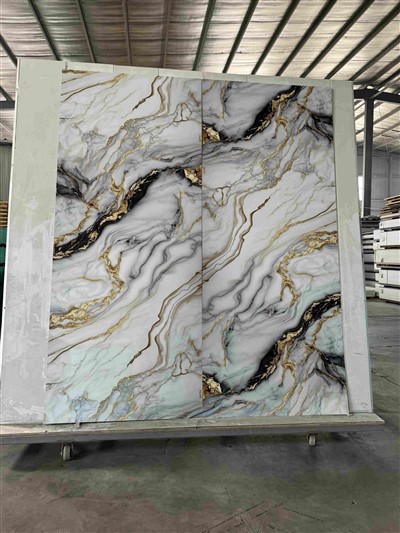
When it comes to enhancing the aesthetics and functionality of indoor spaces, 9mm Indoor WPC Louver is an excellent choice. As a trusted supplier of 9mm Indoor WPC Louver, I understand the importance of accurate measurement for a successful installation. In this blog post, I will guide you through the process of measuring for 9mm Indoor WPC Louver installation, ensuring a seamless and professional finish.


Understanding the Basics of 9mm Indoor WPC Louver
Before we delve into the measurement process, let's briefly understand what 9mm Indoor WPC Louver is. WPC, or Wood - Plastic Composite, is a material that combines the best properties of wood and plastic. The 9mm thickness provides a sturdy and durable option for indoor applications. These louvers are commonly used in areas such as offices, hotels, and residential spaces to add a touch of elegance and privacy.
Pre - installation Preparation
- Inspect the Installation Area: Begin by thoroughly examining the area where the louvers will be installed. Check for any irregularities, such as uneven walls or ceilings. Make sure there are no obstacles like pipes, wires, or protruding fixtures that could interfere with the installation.
- Gather the Necessary Tools: You will need a measuring tape, a level, a pencil, and a straightedge. A measuring tape should be long enough to measure the entire length and height of the installation area. A level will help you ensure that the louvers are installed straight, and a straightedge can be used to mark straight lines.
Measuring the Width
- Single - Panel Installation: If you are installing a single panel of 9mm Indoor WPC Louver, measure the width of the area where it will be placed. Start from one end of the installation area and measure to the other end. Measure at multiple points along the height to account for any variations in the wall. Record the narrowest measurement. This is important because the louver panel needs to fit within the available space. For example, if you are installing a louver on a wall between two columns, measure the distance between the inner faces of the columns.
- Multiple - Panel Installation: When installing multiple panels side by side, measure the total width of the installation area. Then, decide on the number of panels you want to use. Divide the total width by the number of panels to get the approximate width of each panel. However, you need to account for the spacing between the panels. A common spacing is around 3 - 5mm. So, if you have a total width of 2000mm and you want to install 5 panels with a 3mm spacing between each panel, the calculation would be as follows: Let the width of each panel be (x). The total width of the 5 panels and 4 spacings is (5x+4\times3 = 2000). Solving for (x), we get (x=\frac{2000 - 12}{5}=397.6)mm.
Measuring the Height
- Floor - to - Ceiling Installation: Measure the height from the floor to the ceiling at multiple points along the width of the installation area. Similar to measuring the width, record the shortest measurement. This ensures that the louver panel will fit without any gaps at the top or bottom. For example, in a room with a sloped ceiling, measure at the lowest point of the ceiling.
- Partial - Height Installation: If you are installing the louvers at a partial height, measure from the starting point (such as a baseboard or a specific mark on the wall) to the ending point. Again, measure at multiple points to ensure accuracy.
Measuring for Angled Installations
- Identify the Angle: If the installation area has an angle, such as in a corner or a sloped wall, you need to measure the angle accurately. You can use a protractor or an angle - measuring tool. Place the tool on the surface where the louver will be installed and measure the angle.
- Adjust the Measurements: Once you have measured the angle, you may need to adjust the width and height measurements of the louver panels. For example, if you are installing louvers on a sloped ceiling, the length of the panel may need to be adjusted to fit the slope. You can use trigonometric functions (if you are comfortable with them) or consult with a professional for more complex angle calculations.
Considering Overlap and Spacing
- Overlap: In some cases, you may want the louvers to overlap for better privacy or a more seamless look. Measure the amount of overlap you desire. Typically, an overlap of 10 - 20mm is common. When measuring for the panels, add the overlap amount to the width or height measurements as appropriate.
- Spacing: As mentioned earlier, spacing between panels is important for both aesthetic and functional reasons. Measure the desired spacing between each panel and factor it into your calculations when determining the panel sizes.
Using Templates
- Create a Template: If the installation area has a complex shape, creating a template can be very helpful. You can use a piece of cardboard or thin plywood to create a template that matches the shape of the installation area. Cut the template according to the measurements you have taken. Then, place the template on the louver panels to mark the cutting lines.
- Verify the Template: Before cutting the louver panels, double - check the template against the installation area to ensure that it fits correctly. Make any necessary adjustments to the template.
Checking Compatibility with Other Products
- Wall Panels: If you are using the 9mm Indoor WPC Louver in conjunction with other wall panels, such as 168*24 Wpc Wall Panel or 204*10 Wpc Wall Panel Indoor, measure the dimensions of these panels as well. Ensure that the louvers will fit seamlessly with the other panels in terms of height, width, and spacing.
Finalizing the Measurements
- Double - check the Measurements: Once you have completed all the measurements, go through them again to ensure accuracy. Measure each dimension at least twice. Compare the measurements with your installation plan to make sure everything aligns.
- Record the Measurements: Write down all the measurements clearly. Include details such as the width, height, angle (if applicable), overlap, and spacing. Keep these records handy during the installation process.
Conclusion
Accurate measurement is the key to a successful installation of 9mm Indoor WPC Louver. By following these steps, you can ensure that the louvers fit perfectly in your desired space. If you have any questions or need further assistance with measuring or installing our 9mm Indoor WPC Louver, feel free to reach out. We are here to help you make your indoor space more beautiful and functional. Whether you are a contractor, a designer, or a homeowner, our high - quality louvers are designed to meet your needs. Contact us today to discuss your project requirements and explore our range of products.
References
- Wood - Plastic Composite Handbook: A Comprehensive Guide to WPC Materials and Applications
- Interior Design for Commercial Spaces: Best Practices and Trends