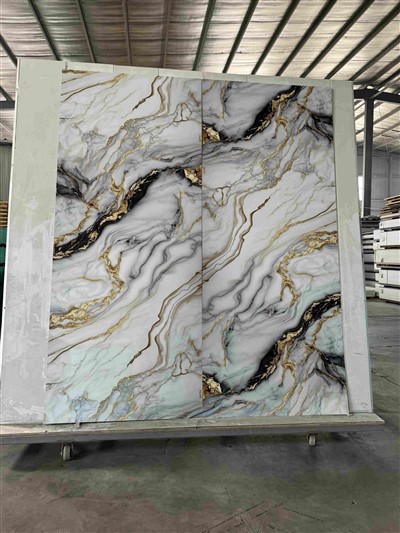
Hey there! As a supplier of Matt SPC Wall Panels, I often get asked about how to measure the area for their installation. It's a crucial step that can save you a lot of time, money, and headaches down the road. So, let's dive right in and break it down step by step.
Why Measuring the Area is Important
Before we get into the nitty - gritty of measuring, let me tell you why it's so important. When you install Matt SPC Wall Panels, you don't want to end up with too much or too little material. Ordering too much means you're wasting money on extra panels that you won't use. On the other hand, ordering too little means you'll have to place a second order, which can delay your project and might even result in a slight color or texture variation between the first and second batch.
Tools You'll Need
First things first, gather the necessary tools. You don't need anything fancy. A good old tape measure is the star of the show here. Make sure it's long enough to measure the height and width of your walls. A notepad and a pen or a smartphone with a note - taking app are also handy for jotting down your measurements.
Measuring Rectangular or Square Walls
Most walls in homes and commercial spaces are rectangular or square. Measuring these is pretty straightforward.
- Height Measurement: Stand at one corner of the wall and extend your tape measure from the floor to the ceiling. Make sure the tape measure is straight and not sagging. Write down this measurement. For example, if the height of the wall is 8 feet, note it as “8 ft”.
- Width Measurement: Next, measure the width of the wall. Start from one end of the wall and extend the tape measure to the other end. Again, keep it straight. Let's say the width is 10 feet, write “10 ft”.
- Calculating the Area: To find the area of a rectangular or square wall, use the formula: Area = Height × Width. In our example, the area would be 8 ft × 10 ft = 80 square feet.
Measuring Irregularly Shaped Walls
Not all walls are perfect rectangles. You might have walls with alcoves, bay windows, or other irregular features. Here's how you can handle them.
- Break it Down: Divide the irregular wall into smaller, regular shapes like rectangles and triangles. For example, if you have an alcove in the wall, you can separate the main part of the wall into a rectangle and the alcove into another rectangle or a triangle.
- Measure Each Section: Measure the height and width of each smaller shape as you would for a regular wall. For a triangle, you'll need to measure the base and the height. The formula for the area of a triangle is Area = 0.5 × Base × Height.
- Sum Up the Areas: Once you've calculated the area of each smaller shape, add them together to get the total area of the irregular wall.
Accounting for Doors and Windows
Don't forget about doors and windows! You don't need to cover them with Matt SPC Wall Panels, so you'll need to subtract their areas from the total wall area.
- Measuring Doors and Windows: Measure the height and width of each door and window just like you did for the walls. Calculate their areas using the same formula (Area = Height × Width).
- Subtracting from the Total Wall Area: Let's say your wall has an area of 100 square feet, and there's a window with an area of 10 square feet and a door with an area of 20 square feet. Subtract the combined area of the door and window (10 + 20 = 30 square feet) from the wall area. So, the area you need to cover with Matt SPC Wall Panels is 100 - 30 = 70 square feet.
Considering Waste Factor
It's always a good idea to account for a waste factor. During installation, there might be some panels that get cut incorrectly or damaged. A waste factor of 5 - 10% is usually a good rule of thumb.
- Calculating the Waste: Multiply the total area you need to cover by the waste factor. For example, if your total area is 70 square feet and you're using a 10% waste factor, the waste area would be 70 × 0.1 = 7 square feet.
- Total Area to Order: Add the waste area to the area you need to cover. So, in our example, you'd need to order 70+7 = 77 square feet of Matt SPC Wall Panels.
Our Matt SPC Wall Panels
Now that you know how to measure the area for installation, let me tell you a bit about our Matt SPC Wall Panel. They are made from high - quality materials, offering durability, moisture resistance, and a beautiful matte finish. They are easy to install and can transform any space. And if you're looking for a different look, we also have the PET Glossy SPC Wall Panel, which gives a shiny, modern appearance.
Getting in Touch
If you're interested in purchasing our Matt SPC Wall Panels or have any questions about the installation process, don't hesitate to reach out. We're here to help you make your project a success. Whether you're a DIY enthusiast or a professional contractor, we can provide you with the right amount of panels and all the support you need.
References
- Construction Math for Dummies by Mark Ryan
- Home Improvement Handbook by DIY Experts
So, go ahead and start measuring your walls. With a little bit of math and some careful planning, you'll be on your way to a beautiful wall installation with our Matt SPC Wall Panels.