As a supplier of 17mm Indoor WPC Louver, I am frequently asked about the anti - slip performance of our product. In this blog, I will delve into the details of the anti - slip performance of 17mm Indoor WPC Louver, exploring the factors that contribute to it, testing methods, and its significance in indoor applications.
Understanding the Basics of 17mm Indoor WPC Louver
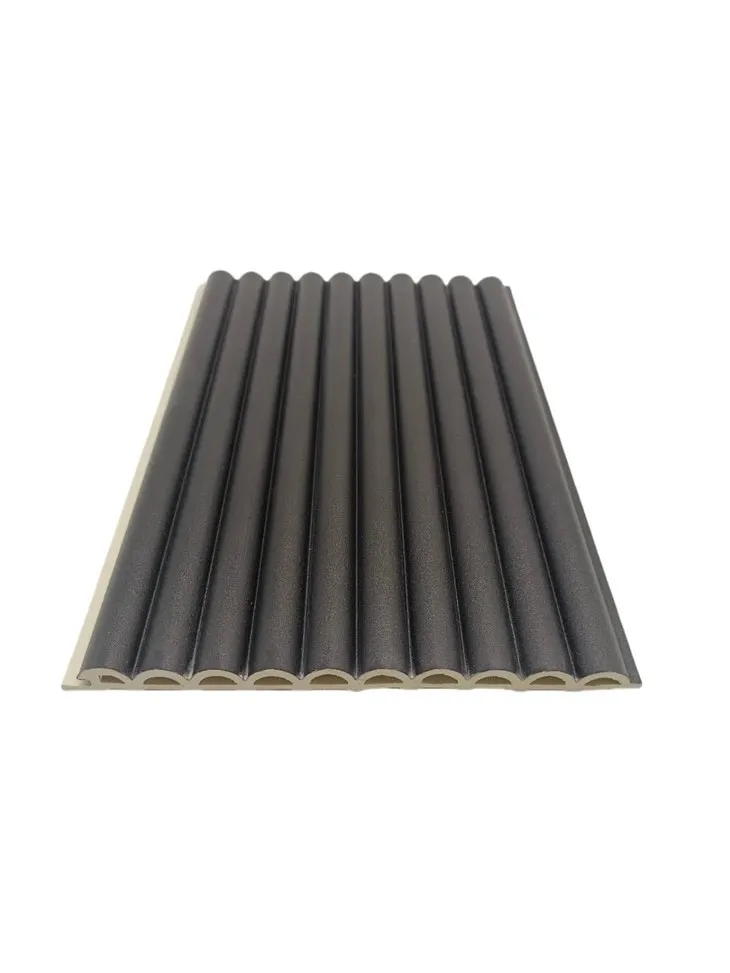
Before we discuss the anti - slip performance, let's briefly understand what 17mm Indoor WPC Louver is. WPC stands for Wood - Plastic Composite, which is a material made by combining wood fibers and thermoplastics. The 17mm refers to the thickness of the louver, which provides a sturdy and durable option for indoor applications. Our company offers a range of WPC louvers, including 10mm Indoor WPC Louver and 9mm Indoor WPC Louver, but the 17mm version is particularly popular for its enhanced strength and stability.
Factors Affecting the Anti - Slip Performance
The anti - slip performance of 17mm Indoor WPC Louver is influenced by several factors.
Surface Texture
The surface texture of the louver plays a crucial role in its anti - slip ability. Our 17mm Indoor WPC Louver is designed with a special surface pattern that increases friction. This pattern is carefully engineered to provide grip without being too abrasive. The microscopic irregularities on the surface create additional contact points with the soles of shoes, reducing the risk of slipping. For example, a smooth surface would have less friction, making it more slippery, especially when wet. In contrast, our textured surface mimics the natural grip - enhancing properties of materials like rubber.
Material Composition
The composition of the WPC material also affects the anti - slip performance. The combination of wood fibers and thermoplastics in our 17mm Indoor WPC Louver is optimized to provide a balance between flexibility and stiffness. The wood fibers add a certain degree of roughness to the surface, while the thermoplastics contribute to the overall durability and water - resistance of the material. This unique composition helps to maintain the anti - slip properties even in humid or damp indoor environments.
Environmental Conditions
Indoor environmental conditions can have an impact on the anti - slip performance. For instance, in areas with high humidity, such as bathrooms or kitchens, the surface of the louver may become slightly damp. Our 17mm Indoor WPC Louver is designed to perform well in these conditions. It has a low water absorption rate, which means that it does not become overly slippery when exposed to moisture. Additionally, the surface texture helps to disperse water quickly, reducing the likelihood of a thin film of water forming on the surface, which could lead to slipping.
Testing the Anti - Slip Performance
To ensure the high anti - slip performance of our 17mm Indoor WPC Louver, we conduct rigorous testing.
Coefficient of Friction Testing
One of the most common methods for testing anti - slip performance is measuring the coefficient of friction (COF). The COF is a value that represents the ratio of the force required to move an object across a surface to the force pressing the object against the surface. A higher COF indicates better anti - slip performance. We use specialized equipment to measure the COF of our 17mm Indoor WPC Louver under different conditions, including dry and wet surfaces. Our products consistently meet or exceed industry standards for COF, ensuring a safe walking surface.
Slip Resistance Classification
In addition to COF testing, we also classify the slip resistance of our 17mm Indoor WPC Louver according to recognized standards. These classifications help customers understand the level of safety provided by the product. For example, in some regions, there are specific requirements for slip resistance in public buildings, and our products are designed to meet these standards.
Significance of Anti - Slip Performance in Indoor Applications
The anti - slip performance of 17mm Indoor WPC Louver is of great significance in indoor applications.
Safety
Safety is the primary concern in any indoor space. Whether it is a residential home, a commercial building, or a public facility, preventing slips and falls is crucial. Our 17mm Indoor WPC Louver provides a safe walking surface, reducing the risk of accidents. This is especially important in areas where people may be moving quickly or where there is a higher likelihood of spills, such as hallways, staircases, and entryways.
Durability and Maintenance
A good anti - slip surface also contributes to the durability of the louver. Since it reduces the likelihood of slips and falls, there is less chance of damage to the louver from impacts. Additionally, the anti - slip properties are maintained over time, which means that the louver does not require frequent replacement due to loss of slip resistance. This makes it a cost - effective and low - maintenance option for indoor applications.
Aesthetics and Design
Our 17mm Indoor WPC Louver not only offers excellent anti - slip performance but also has an attractive appearance. It can be used to enhance the aesthetic appeal of indoor spaces, while still providing a safe environment. The louver can be installed in various patterns and configurations, allowing for creative design solutions. For example, it can be used to create a modern and stylish look in a living room or a more traditional look in a hallway.
Comparison with Other Products
When compared to other materials commonly used for indoor flooring or wall coverings, our 17mm Indoor WPC Louver has several advantages in terms of anti - slip performance.
Compared to Traditional Wood
Traditional wood can be slippery, especially when wet. It also requires regular maintenance to prevent warping and damage. In contrast, our 17mm Indoor WPC Louver is more water - resistant and has a better anti - slip surface. It does not require the same level of maintenance as traditional wood, making it a more practical choice for indoor applications.
Compared to Tile
Tile can be very slippery, especially when it is wet. While some tiles are designed with anti - slip properties, they may not be as effective as our 17mm Indoor WPC Louver. Additionally, tile can be cold underfoot, while WPC provides a more comfortable walking surface.

Conclusion
In conclusion, the anti - slip performance of our 17mm Indoor WPC Louver is a result of careful design, high - quality materials, and rigorous testing. The surface texture, material composition, and environmental adaptability all contribute to its excellent anti - slip properties. This makes it a safe, durable, and aesthetically pleasing option for indoor applications.
If you are interested in learning more about our 17mm Indoor WPC Louver or other products such as 158*10 Ten Arc Wpc Wall Panel, we encourage you to contact us for a detailed discussion about your specific needs and to explore potential procurement opportunities. We are committed to providing high - quality products and excellent customer service.
References
- ASTM International. Standard Test Methods for Measuring Surface Friction Characteristics Using a Variable Incidence Tribometer. ASTM D2047 - 11.
- European Committee for Standardization. Slip resistance classification of new and used pedestrian surfaces. EN 13036 - 4.