


Hey there! As a supplier of indoor WPC louvers, I often get asked about the bending strength of these products. It's a crucial factor, especially when you're looking to use them in various indoor settings. So, let's dive right in and explore what the bending strength of indoor WPC louvers is all about.
What is WPC?
First off, let's quickly cover what WPC stands for. WPC means Wood - Plastic Composite. It's a material that combines wood fibers and thermoplastics. This mix gives WPC some pretty cool properties. It's durable, resistant to moisture, and has a more natural look compared to pure plastic products. That's why it's a popular choice for indoor applications like louvers.
Why Bending Strength Matters
Bending strength is super important for indoor WPC louvers. You don't want your louvers to break or deform easily when they're installed. For example, if there's a bit of accidental pressure on them, say someone brushes against them while walking by, they should be able to withstand it without getting damaged. Also, during the installation process, they need to be flexible enough to be bent slightly to fit into the right space, but not so much that they crack.
Factors Affecting Bending Strength
There are several factors that can influence the bending strength of indoor WPC louvers.
Material Composition
The ratio of wood fibers to plastic in the WPC plays a big role. If there's too much wood fiber, the louvers might be more brittle and have lower bending strength. On the other hand, if there's too much plastic, they might be too flexible and not hold their shape well. A well - balanced composition is key to getting the right bending strength.
Manufacturing Process
How the WPC louvers are made also matters. The extrusion process, for instance, can affect the internal structure of the louvers. If the extrusion is done at the wrong temperature or pressure, it can lead to a less - uniform structure, which in turn can reduce the bending strength.
Louver Thickness
Thicker louvers generally have higher bending strength. A thicker profile can better resist bending forces. For example, our 24mm Indoor WPC Louver has a greater ability to withstand bending compared to thinner ones.
Design and Shape
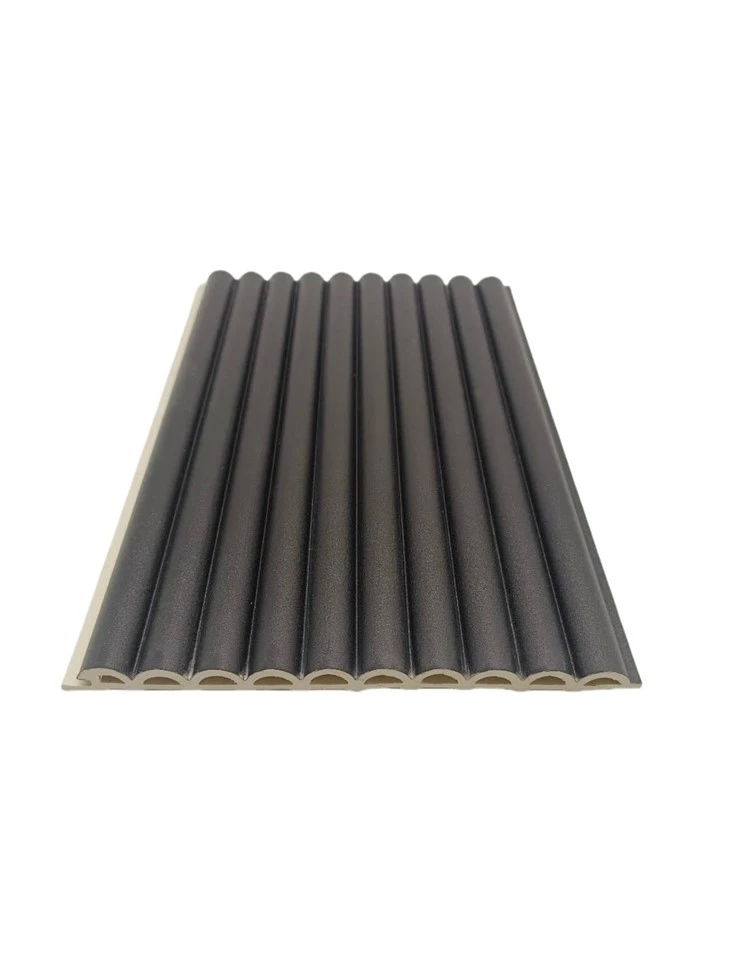
The shape of the louver can impact its bending strength. Louvers with an arc design, like our 158*9 Arc Wpc Wall Panel and 158*10 Arc Wpc Wall Panel For Indoor, distribute the bending forces differently compared to flat louvers. The arc shape can sometimes add extra strength in certain directions.
Testing Bending Strength
To determine the bending strength of indoor WPC louvers, we use a few standard tests. One common method is the three - point bending test. In this test, a louver sample is placed on two supports, and a load is applied at the center until it starts to bend or break. The amount of load it can withstand before failing is a measure of its bending strength.
We also do real - world simulations. We install the louvers in different indoor environments and observe how they perform over time. This helps us make sure that they can handle the normal wear and tear in real - life situations.
Typical Bending Strength Values
The bending strength of indoor WPC louvers can vary. On average, good - quality indoor WPC louvers can have a bending strength in the range of 15 - 30 MPa (Megapascals). However, this can change depending on the factors we discussed earlier. For example, our thicker and well - designed louvers tend to be on the higher end of this range.
Applications and Bending Strength Requirements
Different indoor applications have different bending strength requirements.
Residential Use
In homes, the bending strength requirements are usually not as high. Louvers in a bedroom or living room are less likely to face heavy impacts. So, a louver with a moderate bending strength can work just fine.
Commercial Use
In commercial settings like offices or hotels, the louvers might face more traffic and accidental impacts. That means they need to have a higher bending strength to ensure they last longer and maintain their appearance.
How We Ensure High Bending Strength
As a supplier, we take several steps to ensure that our indoor WPC louvers have high bending strength.

Quality Control
We have strict quality control measures in place. Every batch of WPC material is tested for its composition before it's used to make louvers. During the manufacturing process, we monitor the temperature, pressure, and other parameters to make sure the extrusion is done correctly.
Research and Development
We're constantly researching and developing new ways to improve the bending strength of our louvers. We experiment with different material compositions and manufacturing techniques to find the best combination.
Conclusion
So, in a nutshell, the bending strength of indoor WPC louvers is affected by material composition, manufacturing process, thickness, and design. It's an important factor to consider when choosing louvers for your indoor space. Whether it's for residential or commercial use, you need to make sure the louvers can withstand the expected forces.
If you're interested in our high - quality indoor WPC louvers with excellent bending strength, don't hesitate to reach out. We're here to provide you with the best products and answer any questions you might have. Let's start a conversation about your indoor louver needs!
References
- ASTM D790 - Standard Test Methods for Flexural Properties of Unreinforced and Reinforced Plastics and Electrical Insulating Materials.
- "Wood - Plastic Composites: Materials, Processing, and Products" by X. Cai and S. Jacobson.


