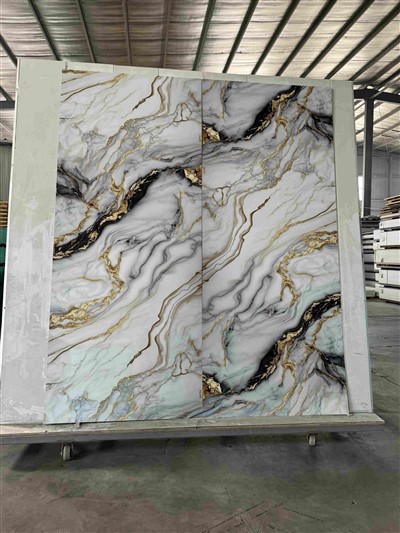
As a supplier of bamboo charcoal boards, I often encounter questions from customers about the properties of our products. One of the most frequently asked questions is, "What is the thermal conductivity of a bamboo charcoal board?" In this blog post, I will delve into this topic, providing you with a comprehensive understanding of the thermal conductivity of bamboo charcoal boards and its implications.
Understanding Thermal Conductivity
Before we discuss the thermal conductivity of bamboo charcoal boards, it's essential to understand what thermal conductivity is. Thermal conductivity is a measure of a material's ability to conduct heat. It is defined as the quantity of heat (in watts) that passes through a unit area (in square meters) of a material in a direction normal to that surface per unit time (in seconds) when a temperature gradient of one kelvin per unit length (in meters) is maintained across the material. In simpler terms, it tells us how quickly heat can transfer through a material.
Materials with high thermal conductivity, such as metals like copper and aluminum, can transfer heat rapidly. On the other hand, materials with low thermal conductivity, like wood and insulation materials, are poor conductors of heat and can act as thermal insulators.
Thermal Conductivity of Bamboo Charcoal Boards
Bamboo charcoal boards are known for their unique properties, including their relatively low thermal conductivity. The thermal conductivity of a bamboo charcoal board typically ranges from 0.08 to 0.15 W/(m·K). This value is significantly lower than that of many common building materials, such as concrete (1.73 W/(m·K)) and steel (50.2 W/(m·K)).
The low thermal conductivity of bamboo charcoal boards can be attributed to several factors. First, bamboo charcoal itself is a porous material. The numerous pores within the charcoal structure trap air, which is a poor conductor of heat. This trapped air acts as an insulating layer, reducing the overall thermal conductivity of the board.
Second, the manufacturing process of bamboo charcoal boards also plays a role. During the production of bamboo charcoal boards, the bamboo is carbonized at high temperatures, which not only enhances its strength and durability but also further reduces its thermal conductivity.
Implications of Low Thermal Conductivity
The low thermal conductivity of bamboo charcoal boards has several practical implications, making them a desirable choice for various applications.
Energy Efficiency in Buildings
In the construction industry, energy efficiency is a top priority. Bamboo charcoal boards can be used as insulation materials in walls, floors, and ceilings. Their low thermal conductivity helps to reduce heat transfer between the interior and exterior of a building, keeping the indoor environment cool in summer and warm in winter. This, in turn, reduces the energy consumption of heating and cooling systems, leading to lower energy bills and a more sustainable building design.
Food and Beverage Industry
In the food and beverage industry, maintaining the temperature of products is crucial. Bamboo charcoal boards can be used as packaging materials for food and beverages, providing thermal insulation to keep the products fresh and at the desired temperature for a longer period.
Electronics
In the electronics industry, heat management is a significant challenge. Bamboo charcoal boards can be used as heat insulators in electronic devices, preventing the transfer of heat from the internal components to the exterior, which can improve the performance and lifespan of the devices.
Factors Affecting Thermal Conductivity
While the typical thermal conductivity of bamboo charcoal boards ranges from 0.08 to 0.15 W/(m·K), it's important to note that this value can be affected by several factors.
Density
The density of a bamboo charcoal board can have a significant impact on its thermal conductivity. Generally, boards with higher density have lower porosity, which means there is less trapped air to act as an insulator. As a result, higher-density boards tend to have higher thermal conductivity.
Moisture Content
Moisture can also affect the thermal conductivity of bamboo charcoal boards. Water has a higher thermal conductivity than air, so an increase in moisture content can lead to an increase in the overall thermal conductivity of the board. Therefore, it's important to store and use bamboo charcoal boards in a dry environment to maintain their low thermal conductivity.
Temperature
The thermal conductivity of bamboo charcoal boards can also vary with temperature. As the temperature increases, the thermal conductivity of the board may also increase slightly. However, this effect is relatively small compared to the impact of density and moisture content.
Our Bamboo Charcoal Boards
At our company, we take pride in producing high-quality bamboo charcoal boards with excellent thermal insulation properties. Our MANUFACTURE FOR BAMBOO CHARCOAL BOARD 5/8MM is carefully crafted using advanced manufacturing techniques to ensure consistent quality and performance.


We source our bamboo from sustainable forests, ensuring that our products are not only environmentally friendly but also of the highest quality. Our bamboo charcoal boards undergo strict quality control measures to ensure that they meet the highest standards in terms of thermal conductivity, strength, and durability.
Contact Us for Procurement
If you are interested in purchasing bamboo charcoal boards for your project, we would be delighted to hear from you. Our team of experts is ready to provide you with detailed information about our products, including their thermal conductivity, specifications, and pricing. We can also offer customized solutions to meet your specific requirements.
Whether you are a builder, architect, or business owner, our bamboo charcoal boards can provide you with a cost-effective and sustainable solution for your thermal insulation needs. Contact us today to start the procurement process and discuss how our bamboo charcoal boards can benefit your project.
References
- "Thermal Conductivity of Building Materials." Engineering ToolBox.
- "Properties of Bamboo Charcoal." Journal of Sustainable Materials and Structures.
- "Effect of Density and Moisture Content on the Thermal Conductivity of Bamboo Charcoal Boards." International Journal of Thermal Sciences.