When it comes to indoor decoration, WPC (Wood - Plastic Composite) louvers have gained significant popularity in recent years. As a supplier of 9mm Indoor WPC Louver, I am often asked about the heat resistance of our product. In this blog, I will delve into the heat - resistant properties of 9mm Indoor WPC Louver, exploring its performance, factors affecting it, and practical applications.
Understanding the Basics of WPC Louvers
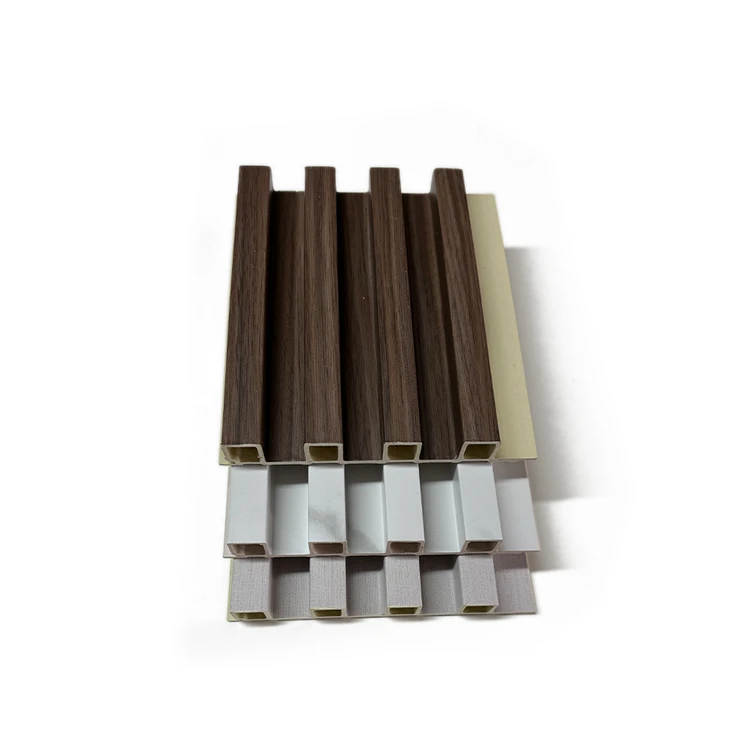
WPC is a composite material made by combining wood fibers or flour with thermoplastics. This combination results in a product that combines the aesthetic appeal of wood with the durability and low - maintenance characteristics of plastic. Our 9mm Indoor WPC Louver is designed specifically for indoor use, offering an elegant and functional solution for room dividers, partitions, and decorative elements.
Heat Resistance Performance of 9mm Indoor WPC Louver
The heat resistance of 9mm Indoor WPC Louver is an important factor to consider, especially in indoor environments where temperature variations can occur. Our product is engineered to withstand a certain range of temperatures without significant deformation or damage.
Under normal indoor temperature conditions, typically between 18°C - 25°C (64°F - 77°F), the 9mm Indoor WPC Louver maintains its shape, color, and structural integrity. It does not warp, crack, or lose its mechanical properties. This makes it suitable for a variety of indoor spaces, including living rooms, bedrooms, offices, and commercial areas.
However, when exposed to higher temperatures, the performance of the WPC louver may change. In general, our 9mm Indoor WPC Louver can withstand temperatures up to approximately 60°C (140°F) for short periods without permanent damage. At this temperature range, the material may experience some minor expansion, but it will return to its original shape once the temperature returns to normal.
If the temperature exceeds 60°C (140°F) for an extended period, there is a risk of more significant deformation. The louver may start to warp, and the surface finish may be affected. Therefore, it is crucial to avoid exposing the 9mm Indoor WPC Louver to direct heat sources such as radiators, heaters, or sunlight concentrated through windows for long periods.
Factors Affecting Heat Resistance
Several factors can influence the heat resistance of 9mm Indoor WPC Louver:

1. Composition of the WPC Material
The ratio of wood fibers to thermoplastics in the WPC composition plays a significant role. A higher proportion of thermoplastics generally provides better heat resistance, as plastics have a higher melting point compared to wood. Our 9mm Indoor WPC Louver is formulated with an optimized ratio to ensure a good balance between heat resistance and other properties such as strength and appearance.
2. Additives
Additives are often incorporated into the WPC material to enhance its performance. Heat stabilizers can be added to improve the heat resistance of the louver. These stabilizers help to prevent the degradation of the material at elevated temperatures, reducing the risk of deformation and discoloration.
3. Manufacturing Process
The manufacturing process also affects the heat resistance of the WPC louver. Proper extrusion and molding techniques ensure a uniform structure, which is essential for consistent heat - resistant performance. Our state - of - the - art manufacturing facilities use advanced processes to produce high - quality 9mm Indoor WPC Louver with excellent heat resistance.
Practical Applications and Heat Resistance Considerations
In indoor decoration, the 9mm Indoor WPC Louver can be used in various applications. Let's take a look at some common scenarios and how heat resistance comes into play:
1. Room Dividers
When used as room dividers, the 9mm Indoor WPC Louver can create a stylish and functional separation between different areas of a room. In a living room, for example, it can divide the seating area from the dining area. Since the normal temperature in a living room is within the comfortable range, the heat resistance of the louver is usually not a major concern. However, if there is a fireplace in the room, it is important to ensure that the louver is placed at a safe distance from the heat source to avoid damage.
2. Partitions in Offices
In office spaces, 9mm Indoor WPC Louver can be used as partitions to create private work areas. Offices are typically maintained at a stable temperature, but in areas near computer servers or electrical equipment that generate heat, it is necessary to consider the heat resistance of the louver. Placing the louver at a proper distance from these heat - generating sources will help to ensure its long - term performance.

3. Decorative Elements
As decorative elements, the 9mm Indoor WPC Louver can add a touch of elegance to any indoor space. Whether it is used on walls or ceilings, it is important to keep in mind the potential heat sources in the room. For instance, in a kitchen where there are stoves and ovens, it is advisable to avoid using the louver in close proximity to these heat - intensive appliances.
Comparison with Other WPC Products
We also offer other WPC products, such as the 210*15 Wpc Wall Panel, 24mm Indoor WPC Louver, and Wpc Wall Panel For Indoor Decoration. While the basic composition of these products is similar, their heat - resistant properties may vary slightly due to differences in thickness, design, and manufacturing processes.
The 24mm Indoor WPC Louver, for example, may have better heat - insulating properties compared to the 9mm version due to its greater thickness. However, the 9mm Indoor WPC Louver offers more flexibility in terms of installation and is often preferred for applications where a thinner profile is required.
Conclusion and Call to Action
In conclusion, the 9mm Indoor WPC Louver offers a good level of heat resistance for most indoor applications. It can withstand normal indoor temperature variations and short - term exposure to moderately high temperatures. By understanding the factors affecting its heat resistance and taking appropriate precautions, you can ensure the long - term performance and beauty of the louver in your indoor space.
If you are interested in purchasing our 9mm Indoor WPC Louver or have any questions about its heat resistance or other properties, please feel free to contact us for further information and to start a procurement negotiation. We are committed to providing high - quality products and excellent customer service to meet your indoor decoration needs.
References
- ASTM International. "Standard Test Methods for Evaluating the Heat Resistance of Composite Materials." ASTM D3418 - 15.
- Wood - Plastic Composite Association. "Technical Report on Heat Resistance of WPC Products." 2020.