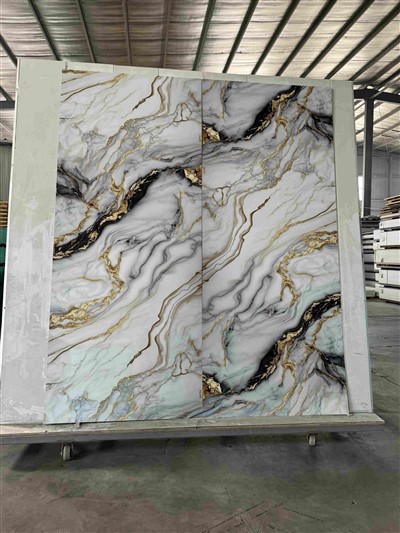
As a supplier of outdoor film wall panels, I often get asked about the bending strength of these products. Bending strength is a crucial property, especially for outdoor applications where the panels may be subjected to various forces. In this blog post, I'll delve into what bending strength means for outdoor film wall panels, factors that affect it, and how it impacts the performance and suitability of our products.

Understanding Bending Strength
Bending strength, also known as flexural strength, refers to the maximum stress that a material can withstand before it starts to deform or break under a bending load. For outdoor film wall panels, this is an important consideration because they are often installed in areas where they may experience wind pressure, impacts from debris, or even the weight of snow in colder climates.
When a panel is subjected to a bending force, it experiences tension on one side and compression on the other. The bending strength of the panel determines how well it can resist these forces without failing. A panel with high bending strength will be more durable and less likely to crack or break, even under challenging conditions.
Factors Affecting Bending Strength
Several factors can influence the bending strength of outdoor film wall panels. Let's take a closer look at some of the most important ones:
Material Composition
The type of material used to make the panel is one of the primary factors affecting its bending strength. Our outdoor film wall panels are typically made from a combination of PVC and other additives. PVC is a strong and durable material that provides good resistance to bending. However, the specific formulation of the PVC and the addition of other materials can significantly impact the panel's strength.
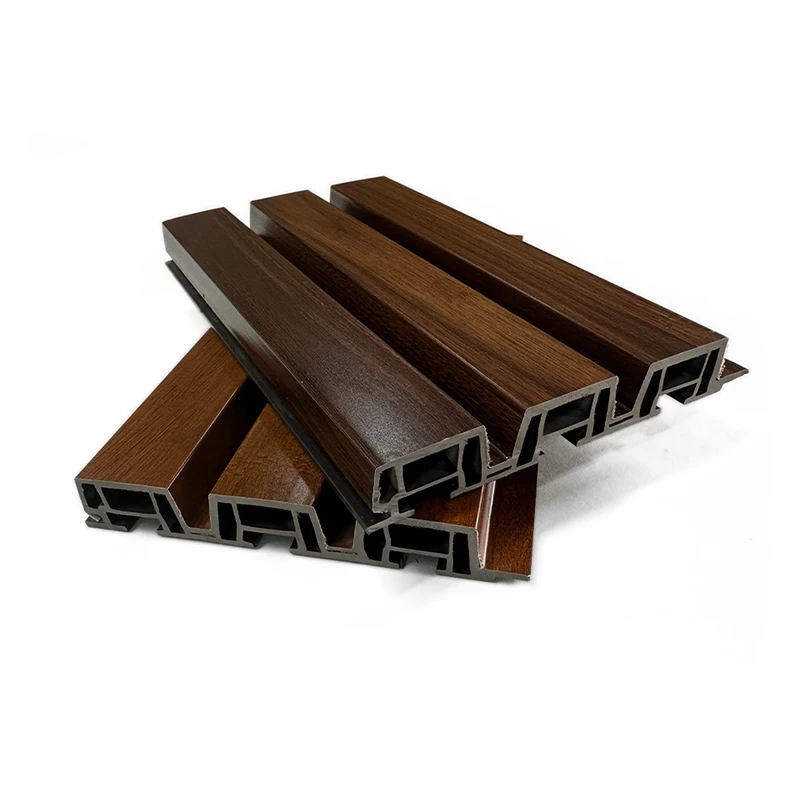
For example, some of our 135*20MM PVC LAMINATED OUTDOOR CLADDING panels are designed with a special blend of PVC and fiberglass reinforcement. This combination enhances the panel's bending strength, making it more suitable for applications where high strength is required.
Panel Thickness
The thickness of the panel also plays a crucial role in determining its bending strength. Generally, thicker panels have higher bending strength than thinner ones. This is because a thicker panel has more material to resist the bending forces, resulting in less deformation.
Our 135*20 Outdoor Film Wall Panel and 300*26 Outdoor Film Wall Panel come in different thicknesses to meet the varying needs of our customers. Thicker panels are ideal for areas with high wind loads or where the panels may be subjected to heavy impacts.
Manufacturing Process
The manufacturing process used to produce the panels can also affect their bending strength. At our facility, we use advanced manufacturing techniques to ensure that our panels have consistent quality and high strength.
For example, we use a high - pressure molding process that compresses the materials together, creating a more dense and uniform structure. This results in panels with better bending strength and improved overall performance.
Installation Method
Proper installation is essential for ensuring the full bending strength of outdoor film wall panels. Incorrect installation can lead to stress concentrations in the panels, reducing their ability to resist bending forces.
We provide detailed installation instructions with all our products to ensure that our customers install the panels correctly. This includes guidelines on spacing, fastening methods, and support structures. By following these instructions, customers can maximize the bending strength and durability of our panels.
Importance of Bending Strength in Outdoor Applications
The bending strength of outdoor film wall panels is crucial for several reasons. Firstly, it ensures the structural integrity of the panels. In outdoor environments, panels may be exposed to strong winds, heavy rain, and other weather conditions. A panel with low bending strength may crack or break under these conditions, compromising the overall appearance and functionality of the installation.
Secondly, high bending strength means better resistance to impacts. Outdoor areas are prone to accidental impacts from objects such as balls, tools, or falling branches. Panels with high bending strength can withstand these impacts without significant damage, reducing the need for frequent repairs or replacements.
Finally, bending strength affects the longevity of the panels. A panel that can resist bending forces over time will last longer, providing a more cost - effective solution for outdoor cladding. This is especially important for commercial and large - scale residential projects where the cost of replacement can be significant.
Testing Bending Strength
To ensure the quality and performance of our outdoor film wall panels, we conduct rigorous testing of their bending strength. We use industry - standard testing methods to measure the maximum load that the panels can withstand before bending or breaking.
Our testing facilities are equipped with state - of - the - art equipment that allows us to accurately simulate real - world conditions. We test panels of different sizes and thicknesses to ensure that they meet or exceed the required standards for bending strength.
The results of these tests are used to continuously improve our products and ensure that we are providing our customers with the highest quality outdoor film wall panels.
Comparing Bending Strength of Different Panel Sizes
Let's compare the bending strength of our 135*20 Outdoor Film Wall Panel and 300*26 Outdoor Film Wall Panel. The 30026 panel, being thicker and wider, generally has a higher bending strength than the 13520 panel.
However, the choice between the two depends on the specific application. If the installation area has relatively low wind loads and minimal risk of impacts, the 13520 panel may be a more cost - effective option. On the other hand, for areas with high wind exposure or where heavy impacts are possible, the 30026 panel is a better choice.
Conclusion
In conclusion, the bending strength of outdoor film wall panels is a critical factor that determines their performance and suitability for outdoor applications. As a supplier, we understand the importance of providing panels with high bending strength to ensure the durability and longevity of our products.
Our range of outdoor film wall panels, including the 135*20MM PVC LAMINATED OUTDOOR CLADDING, 135*20 Outdoor Film Wall Panel, and 300*26 Outdoor Film Wall Panel, are designed to meet the diverse needs of our customers. By considering factors such as material composition, panel thickness, manufacturing process, and installation method, we ensure that our panels have excellent bending strength and can withstand the rigors of outdoor use.
If you are considering using outdoor film wall panels for your next project, we encourage you to contact us to discuss your specific requirements. Our team of experts can help you choose the right panel size and type based on your location, budget, and performance needs. We look forward to working with you to provide the best outdoor cladding solutions.
References
- ASTM D790 - Standard Test Methods for Flexural Properties of Unreinforced and Reinforced Plastics and Electrical Insulating Materials
- ISO 178 - Plastics - Determination of flexural properties